

Jain Yakshinis
In Jainism, Yakshas, and Yakshini, also called Sasanadevatā, are the deities who are attendant to the Tirthankaras. Yakshas are male attendants, and Yakshinis are female. They live in the lower world and have individual personalities that vary in the different sects. Yakshas are shown on the right side of the Tirthankaras idol while Yakshini is on the left side. The two principal sects of Jainism, Digambara, and Svetambara, list these Yakshinis with different names and iconography. Following are twenty-five Yakshinis in Jainism:
Digambara Sect
The Digambara (दिगम्बर) sect — meaning “sky-clad” — is one of the two main traditions of Jainism. Digambaras emphasize the path of complete renunciation, asceticism, and detachment from material possessions. Their Tirthankaras and monks are depicted without clothing, symbolizing total freedom from worldly attachments. In art, Digambara iconography tends to be austere and symbolic, often highlighting divine strength and discipline. The Yakshinis (Shasan Devis) in Digambara imagery are portrayed as powerful guardians seated on animals or mythical beings, each carrying specific weapons and attributes reflecting protection, wisdom, and spiritual energy.
.png)
1. Chakreshwari
Also called Apratichakra, is the attendant of the first Jina, Rishabhanath, along with the yaksha Gomukan. In Digambara, she is depicted with four to twelve arms. In her eight-armed form, in her right hand, she shows the Abhaya mudra and carries an arrow, rope, and a Chakra. In her left hand, she carries a rein, bow, noose goad, and a Chakra. Her mount is an eagle or parrot or Garuda.

4. Vajrashrunkala
She is the attendant of the fourth Jina, Abhinandananatha, along with the yaksha Yaksheswaran. As Vajrashrunkala in Digambaras, she is depicted seated on a swan and carrying a snake, noose, rosary, and fruit in her four hands.
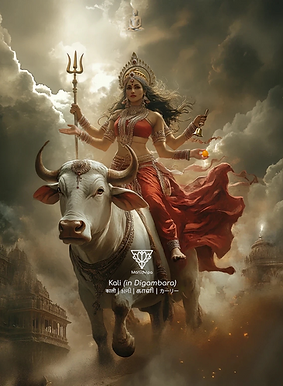
7. Kali
She is the attendant of the seventh Jina, Suparshvanatha, along with the yaksha Madangan. In Digambara, as Kali, she is seated on a white bull and holds a trident, fruit, bell, and one hand in varada mudra.

10. Manavi
She is the attendant of the tenth Jina, Shitalanatha, along with the yaksha Brahma.In Digambara, as Manavi, she is seated on a hog and has four hands carrying a rosary, a flag with a fish symbol, fruit, and one hand in varada mudra.

13. Vairoti
She is the attendant of the thirteenth Jina, Vimalanatha, along with the yaksha Chaturmuga.In Digambara, as Vairoti, she is sitting on a snake and holding two snakes, a bow and an arrow.
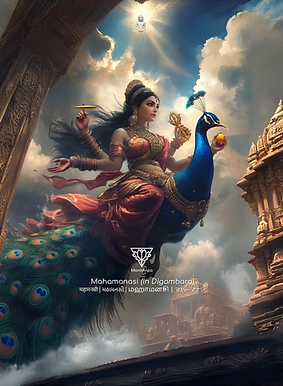
16. Mahamanasi
he is the attendant of the sixteenth Jina, Shantinatha, along with the yaksha Garuda. In Digambara, as Mahamanasi, she is sitting on a peacock and has six hands holding a disc, fruit, vajrayudha, and one hand in varada mudra.

19. Aparajita
She is the attendant of the nineteenth Jina, Māllīnātha, along with the yaksha Gubera. In Digambara, Aparajita is sitting on a lion and is carrying a citrus fruit, sword, shield, and one hand in varada mudra.
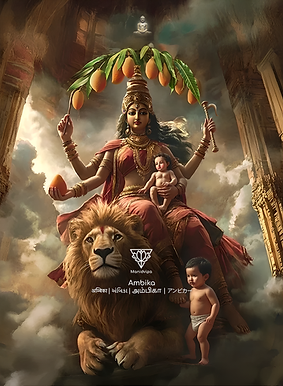
22. Kushmandini or Ambika
She is the attendant of the twenty-second Jina, Neminatha, along with the yaksha Sarvanna. In Svetambaras and Digambara, she is depicted with a golden complexion and has four arms, carrying a mango and a branch of a mango tree in her right hand. In her one left hand, she carries a rein and her two sons. Her mount is a lion.

2. Rohini
Also called Ajita and Logasana, is the attendant of the second Jina, Ajitanatha, along with the Maha Yakshan. She is associated with strength. She is of golden complexion and has four hands carrying a conch, chakra, and two hands in abhaya and varada mudra. She is seated on an iron seat.
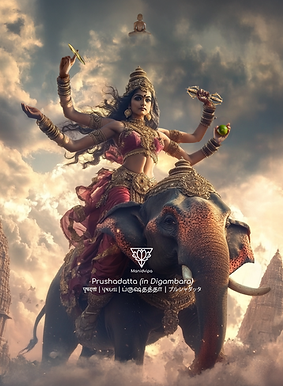
5. Prushadatta
She is the attendant of the fifth Jina, Sumatinatha, along with the yaksha Thumburu. In Digambara, Prushadatta is seated on an elephant and carries a disc, vajra, fruit, and one hand in varada mudra.

8. Jwalamalini
She is the attendant of the eighth Jina, Chandraprabha, along with the yaksha Shyama. In Digambara, Jwalamalini is seated on a buffalo and holds a disc, arrow, noose, shield, trident, sword, and bow in her seven hands and the remaining one hand in varada mudra.
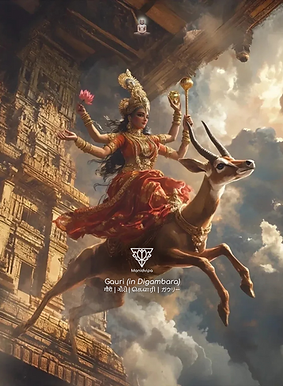
11. Gauri
She is the attendant of the eleventh Jina, Shreyanasanatha, along with the yaksha Iswaran.In Digambara, as Gauri, she is seated on an antelope and has four hands carrying a lotus, kalasha, mace, and one hand in varada mudra.

14. Anantamati
She is the attendant of the fourteenth Jina, Anantanath, along with the yaksha Pathala. In Digambara, as Anantamati, she is sitting on a swan and holding a bow, arrow, fruit, and one hand in varada mudra.

17. Vijaya
She is the attendant of the seventeenth Jina, Kunthunatha, along with the yaksha Gandharva. In Digambara, as Vijaya, she is sitting on a boar and is carrying a conch, chakra, sword, and one hand in varada mudra.

20. Bahurupini
She is the attendant of the twentieth Jina, Munisuvrata, along with the yaksha Varuna. In Digambara, Bahurupini is sitting on a five-headed snake and is carrying a shield, fruit, sword, and one hand in varada mudra.

23. Padmavathi
She is the attendant of the twenty-third Jina, Parshvanatha, along with the yaksha Dharanendra. She is of golden complexion and has four arms, carrying a lotus and a rosary in her right hands, and the two left hands hold fruit and a rein. Her mount is the snake with a cock’s head. She is also depicted with 24 arms in some iconography.

3. Prajnapti
She is the attendant of the third Jina, Sambhavanatha, along with the yaksha Trimukhan. As Prajnapti in Digambara, she has six arms carrying an axe, indhi, crescent moon, fruit, sword, and one hand in varada mudra. Her mount is a peacock in this iconography.

6. Manovegi
She is the attendant of the sixth Jina, Padmaprabha, along with the yaksha Pushyan. In Digambara, Manovegi is seated on a horse and holds a sword, fruit, lance, and one hand in varada mudra.
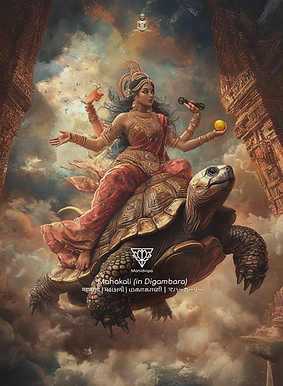
9. Mahakali
She is the attendant of the ninth Jina, Pushpadanta, along with the yaksha Ajita. In Digambara, Mahakali is depicted seated on a tortoise and holds a vajara, club, fruit, and one hand in varada mudra.

12. Gandhari
She is the attendant of the twelfth Jina, Vasupujya, along with the yaksha Kumaran.In Digambara, as Gandhari, she is sitting on a crocodile or Makara and has four hands carrying two lotuses, a mace, and one hand in varada mudra.

15. Manasi
She is the attendant of the fifteenth Jina, Dharmanatha, along with the yaksha Kinnara. In Digambara, as Manasi, she is sitting on a tiger and has six hands holding a lotus, bow, goad, arrow, and lotus, and one hand in varada mudra.

18. Tara
She is the attendant of the eighteenth Jina, Aranatha, along with the yaksha Kendra. In Digambara, Tara is sitting on a swan and is carrying a snake, vajra, deer, and one hand in varada mudra.
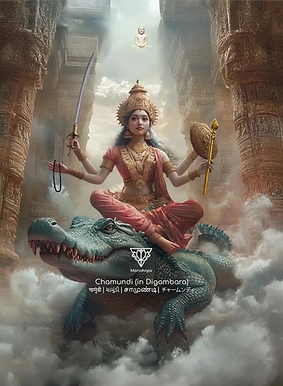
21. Chamundi
She is the attendant of the twenty-first Jina, Naminatha, along with the yaksha Bruhudi. In Digambara, Chamundi is sitting on a makara and is carrying a rosary, staff, shield, and sword.

24. Siddhayika
She is the attendant of the twenty-fourth Jina, Mahavira, along with the yaksha Madanga. She is of golden complexion and has two arms, her right hand in varada mudra and her left hand holding a scripture. Her mount is the lion.
Śvetāmbara Sect
The Śvetāmbara (श्वेताम्बर) sect — meaning “white-clad” — follows a monastic order where ascetics wear simple white robes. Śvetāmbaras emphasize compassion, ritual purity, and the inclusion of both men and women in spiritual practice. Their iconography is often more ornamental and narrative-based, with divine figures adorned in jewels and vibrant colors. The Yakshinis of the Śvetāmbara tradition are depicted as graceful attendants of the Tirthankaras, usually seated on lotuses, lions, or swans, and carrying emblems of peace, learning, and benevolence.

1. Chakreshwari
She is the attendant of the first Jina, Rishabhanath, along with the yaksha Gomukan. In Svetambara, she is depicted with eight hands carrying an arrow, two discs, a noose, a bow, thunder, a goad, and one hand in varada mudra. Her mount is an eagle or parrot or Garuda.
.png)
4. Kali
She is the attendant of the fourth Jina, Abhinandananatha, along with the yaksha Yaksheswaran. In Svetambaras, as Kali, she is seated on a lotus and carrying a noose, a snake, a goad, and one hand in varada mudra.

7. Shanti
She is the attendant of the seventh Jina, Suparshvanatha, along with the yaksha Madangan. Shanti in Svetambaras, is seated on an elephant and has four hands carrying a lance and rosary, and two hands in abhaya and varada mudra.
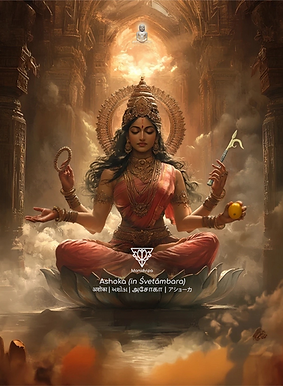
10. Ashoka
She is the attendant of the tenth Jina, Shitalanatha, along with the yaksha Brahma. In Svetambaras, Ashoka is seated on a lotus and holds a fruit, noose, goad, and one hand in varada mudra.
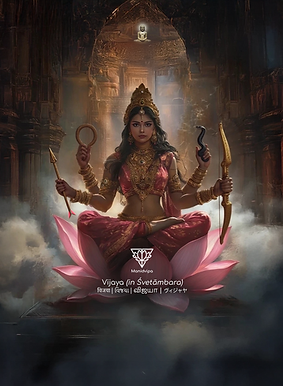
13. Vidita or Vijaya
She is the attendant of the thirteenth Jina, Vimalanatha, along with the yaksha Chaturmuga. In Svetambaras, Vidita, also called Vijaya, is seated on a lotus and holds an arrow, noose, bow, and snake in her four hands.

16. Nirvani
She is the attendant of the sixteenth Jina, Shantinatha, along with the yaksha Garuda. In Svetambaras, Nirvani is seated on a lotus, and in her four hands, she holds two lotuses, a Kamandalu, and a book.

19. Vairoti or Dharanapriyā
She is the attendant of the nineteenth Jina, Māllīnātha, along with the yaksha Gubera. In Svetambaras, Vairoti or Dharanapriyā is seated on a lotus, and in her four hands, she holds a rosary, citrus fruit, and Shakti, and one hand in varada mudra.
22. Kushmandini or Ambika
She is the attendant of the twenty-second Jina, Neminatha, along with the yaksha Sarvanna. In Svetambaras and Digambara, she is depicted with a golden complexion and has four arms, carrying a mango and a branch of a mango tree in her right hand. In her one left hand, she carries a rein and her two sons. Her mount is a lion.
2. Rohini
She is the attendant of the second Jina, Ajitanatha, along with the Maha Yakshan. She is associated with strength. She is of golden complexion and has four hands carrying a conch, chakra, and two hands in abhaya and varada mudra. She is seated on an iron seat.
.png)
5. Mahakali
She is the attendant of the fifth Jina, Sumatinatha, along with the yaksha Thumburu. In Svetambaras, as Mahakali, she is seated on a lotus and carrying a Varoda, noose, citrus fruit, and goad.

8. Bhrkuti
She is the attendant of the eighth Jina, Chandraprabha, along with the yaksha Shyama. In Svetambaras, as Bhrkuti, she is seated on a cat or a swan and has four hands carrying a sword, spear, club, and axe.

11. Manavi or Shrivatsa
She is the attendant of the eleventh Jina, Shreyanasanatha, along with the yaksha Iswaran. In Svetambaras, Manavi, also called Shrivatsa, is seated on a lion and holds a club, urn, goad, and one hand in varada mudra. In Digambara, as Gauri, she is seated on an antelope and has four hands carrying a lotus, kalasha, mace, and one hand in varada mudra.
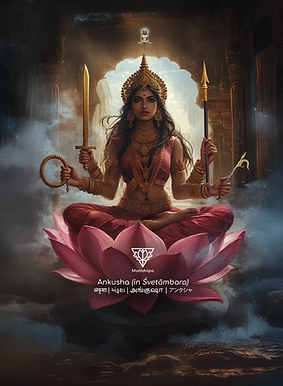
14. Ankusha
She is the attendant of the fourteenth Jina, Anantanath, along with the yaksha Pathala. In Svetambaras, Ankusha is seated on a lotus and holds a sword, noose, spear, and goad in her four hands.

17. Bala
She is the attendant of the seventeenth Jina, Kunthunatha, along with the yaksha Gandharva. In Svetambaras, Bala is seated on a peacock, and in her four hands, she holds a citron, spear, Bhushundi, and lotus.

20. Naradatta
She is the attendant of the twentieth Jina, Munisuvrata, along with the yaksha Varuna. In Svetambaras, Naradatta is seated in the bhadrasana posture and holds a rosary, citron, and trident, and one hand in varada mudra.
23. Padmavathi
She is the attendant of the twenty-third Jina, Parshvanatha, along with the yaksha Dharanendra. She is of golden complexion and has four arms, carrying a lotus and a rosary in her right hands, and the two left hands hold fruit and a rein. Her mount is the snake with a cock’s head. She is also depicted with 24 arms in some iconography.
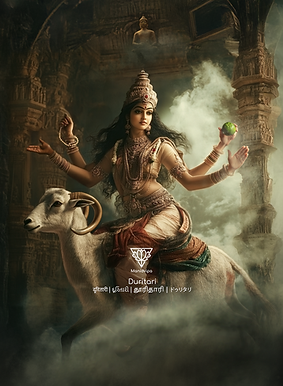
3. Duritari
She is the attendant of the third Jina, Sambhavanatha, along with the yaksha Trimukhan. In Svetambaras, as Duritari, she has four arms carrying a rosary and a fruit and two hands, and abhaya and varada mudra. Her mount is a ram.

6. Shyama or Acyuta
She is the attendant of the sixth Jina, Padmaprabha, along with the yaksha Pushyan. In Svetambaras, she is seated on a man and has four hands carrying a veena and bow, and two hands in abhaya and varada mudra.

9. Sutaraka
She is the attendant of the ninth Jina, Pushpadanta, along with the yaksha Ajita. In Svetambaras, as Sutaraka, she is seated on a bull and has four hands carrying a rosary, urn, goad, and one hand in varada mudra.

12. Chanda or Parachanda
She is the attendant of the twelfth Jina, Vasupujya, along with the yaksha Kumaran. In Svetambaras, Chanda, also called Parachanda, is seated on a horse and holds a sphere, flower, club, and one hand in varada mudra.

15. Kandarpa or Pannagadevi
She is the attendant of the fifteenth Jina, Dharmanatha, along with the yaksha Kinnara. In Svetambaras, Kandarpa, also called Pannagadevi, is seated on a horse or a fish, and in her four hands, she holds two lotuses, a goad, and one hand in abhaya mudra.

18. Dharini
She is the attendant of the eighteenth Jina, Aranatha, along with the yaksha Kendra. In Svetambaras, Dharini is seated on a lotus, and in her four hands, she holds two lotuses, a citrus fruit, and a rosary.
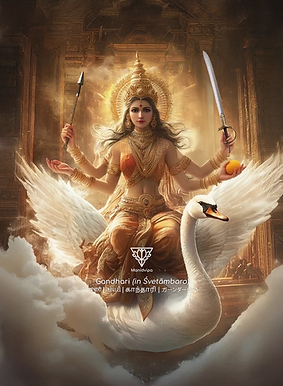
21. Gandhari
She is the attendant of the twenty-first Jina, Naminatha, along with the yaksha Bruhudi. In Svetambaras, Gandhari is seated on. a swan and holds a sword, citron, and spear, and one hand in varada mudra.
24. Siddhayika
She is the attendant of the twenty-fourth Jina, Mahavira, along with the yaksha Madanga. She is of golden complexion and has two arms, her right hand in varada mudra and her left hand holding a scripture. Her mount is the lion.
She is the attendant of the eighth Jina, Chandraprabha, along with the yaksha Shyama.
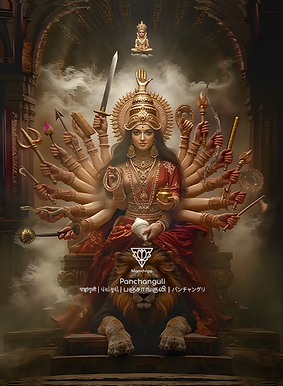
Panchanguli Devi
She is the attendant of Simandhar Swami, a living Tirthankar who is present in another universe called Mahavideh Kshetra. Her associated yaksha is Chandrayan. Panchanguli means “five fingers”. She is a goddess for palmists and Astrologer. She is depicted with eighteen arms and her mount is a lion.
References and Sources:
-
jainpedia.org
-
General reference: Wikipedia – Sanamahism and related articles
Note:
This content has been refined using proofreading tools for clarity and structure and the images were manually created using AI-assisted tools. It is not a generated product but a digitally manipulated interpretation. While it is not traditional artwork, the final version is an original creative work. Manidvipa holds full rights to this, and any use beyond the website is prohibited without permission.